The Ultimate Guide To Affordable Jeans for Every Budget

How much should you actually spend on a pair of jeans? Ask 10 guys and you’ll get answers anywhere from $50 to $500, and every one of them will swear his number is the right one.
My answer is less than most guys think, and the reason has to do with how jeans work. Almost everything else in your closet looks its best the day you buy it and slowly goes downhill from there. A good pair of jeans goes the other way. The dark blue fades in the places where you sit, bend and reach, so after a year of wearing them, they’re shaped by the way you move, and they don’t look like anybody else’s. That’s why the best affordable jeans for men can look as good as pairs that cost 5 times as much, as long as you know what to look for.
So in this guide, we’ll go through 6 pairs of jeans from about $50 to about $340, and I’ll tell you who each one is for. Before the list, I’ll show you how jeans fade, which fit to buy, how to spot a pair that looks cheap, and how to find your size without a fitting room, so you can judge any pair in any store, not just these 6.
How these 6 were picked
Search for the best affordable jeans and you’ll find lists with 20 or 25 pairs on them, and most of them never tell you why a pair made the cut. Every pair here had to pass 5 checks.
First, at least one publication that reviews clothing for a living had to recommend it. That means magazines and sites like Gear Patrol, FashionBeans and Complex, and denim specialists like Heddels, a site that covers almost nothing but denim and workwear. Some picks clear that bar easily, and the Levi’s 501 shows up on nearly every list.
Second, the people who bought it had to like it after wearing it for a while, with no complaint that keeps coming up about the jeans falling apart.
Third, it had to be one of the brand’s core jeans, not a one-season style. When you finally find a pair that fits, you want to be able to buy it again, and a brand that changes its fits every season makes that impossible.
Fourth, the fit had to be one that lasts. Every pick here is a straight leg or close to it, because that’s the fit that has stayed in style the longest, and I’ll explain why below.
And fifth, I checked the regular price of every pair, not the sale price, because sales end and regular prices don’t.
Before the list, one thing about denim
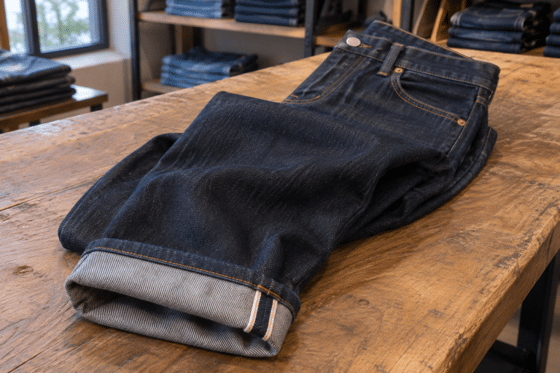
Turn any pair of blue jeans inside out and you’ll see that the inside is a lot lighter than the outside. That isn’t a defect, and it’s the reason jeans age differently from everything else you own.
Denim is woven from 2 sets of threads. The threads that run up and down the leg are dyed blue with indigo, and the threads that run side to side are usually left white, so the blue ends up on the outside and the white ends up on the inside. And indigo doesn’t soak all the way through a thread the way most dyes do. Heddels explains that the threads are dipped in and out of the dye so quickly that the indigo never reaches the center, so each thread ends up blue on the outside and white in the middle. That means every time denim rubs against something, a little of the blue wears away and a little more white shows through.
That’s why a pair of jeans fades where you use it. It fades across your lap, where the fabric creases when you sit, behind your knees, where it bunches up, and on the pocket where you keep your phone. Wear a dark pair for a year, and the fades follow the way you sit, walk and move.
Faded jeans in a store got their fades a different way. For decades, workers sanded and sprayed new jeans by hand to make them look old, and a worker could finish about 2 or 3 pairs an hour. Levi’s now does most of that work with lasers, and the business news site Quartz reported that a laser does the same job in about 90 seconds and does it exactly the same way every time. That’s great news for Levi’s, but it also means the worn-in look on a faded pair is the same worn-in look on every other pair in that wash.
So what does all this mean when you’re shopping? It means that the darker and plainer a pair of jeans is when you buy it, the better it’s going to look a year from now, and that’s true at every price on this list. I’d take a dark, plain $50 pair over a $200 pair that was faded and ripped at the factory, because the $50 pair still has its best year ahead of it.
2-minute CONFIDENCE QUIZ
Find out what's holding you back: your body, your style, or your dating life.
9 questions. You get a score for each and the one area to work on first.
What the extra money buys: selvedge and raw denim, explained
If a $50 pair of jeans can age well, you’re probably wondering what you get when you spend $112 or $340. At the bottom of this list, you’re mostly paying for cotton and a pattern that fits. As you move up, you’re paying for 3 other things.
First, you’re paying for how the fabric was woven. Most denim today comes off fast, modern looms. Selvedge denim is woven on older shuttle looms that run much slower, about one-sixth the speed of a modern loom, according to Uniqlo. Those looms finish the edges of the fabric themselves, which is where the name comes from, so when you cuff a pair of selvedge jeans, you’ll see a clean band down the outer seam, usually with a colored stripe in it. Selvedge doesn’t automatically mean better denim, but it usually comes with denim that was made more slowly and more carefully.
Second, you’re paying for raw denim, which means the fabric was never washed after it was dyed. Raw jeans start out stiff and very dark, and they fade more sharply than anything else, because none of the indigo has been washed out of them yet. They also take a few weeks to break in, and there’s more on that further down.
And third, you’re paying for a name and a design. A.P.C., at the top of this list, is a Paris label, and part of what you pay for is the cut and the name on the button.
What the extra money doesn’t buy is a better fit, and it doesn’t always buy a better mill. Uniqlo’s $60 selvedge jeans are made with denim it developed with Kaihara, a Japanese mill founded in 1893, and the menswear brand Buck Mason sells a pair made with Kaihara selvedge denim for $278. They aren’t the same fabric, but they come from the same place. If you just want jeans that look good and last, you can stop at the 501. Raw denim only starts to make sense when you want a pair you’ll break in and care about.
Which jean fit to buy: straight, slim, tapered or relaxed
If you’ve ever bought a pair of jeans in your size that still looked wrong on you, the fit was probably the problem. The fit decides how a pair of jeans looks more than the brand, the price or the wash does. Every brand names its fits a little differently, and one brand’s slim can be another brand’s skinny, but almost all of them fall into one of 4 shapes. Here’s what each one is and who it’s for.
- A straight leg keeps about the same width from the knee down to the hem. It’s the fit that has never really gone out of style, it works on almost every build, and it’s the one to buy if you’re not sure.
- A slim fit sits closer to the leg all the way down, without clinging the way skinny jeans do. It looks sharp on lean guys, and it’s the hardest fit to wear if you have big legs.
- A tapered fit gives you room in the seat and thighs and then narrows from the knee down. It’s the fit for guys who lift, because your legs fit without the bottom of the jeans looking baggy.
- A relaxed fit has room everywhere and a wider leg. It’s the most comfortable of the 4, and it’s the most casual.
If you’ve been paying attention to what guys are wearing, you’ve probably noticed jeans getting roomier. The straight or slightly relaxed leg has taken over from the tight, tapered fits that were everywhere not long ago, and skinny jeans now look dated. Slim fits still work if you want a sharper look, and relaxed fits are popular, but the straight leg is the one that has outlasted every trend so far. If you’ve been wearing skinny jeans for years, don’t jump all the way to baggy. Move one fit looser, from skinny to slim or from slim to straight, and you’ll look current without feeling like you’re wearing someone else’s pants.
How to tell if jeans look cheap
You’ve probably seen a guy in jeans that looked cheap, and there’s a good chance they didn’t cost much less than yours. What makes jeans look cheap is usually the details a brand adds to make a new pair look interesting, and almost every one of them does the opposite. Here are 4 things to check if you want jeans that look expensive without paying for expensive.
- Look at the fades. If the lines across the lap and the light patches on the thighs were put there at the factory, they look the same on every pair in that wash, and anybody who knows jeans can tell. A lighter wash isn’t the problem, so if you like a lighter blue, look for one that’s even all over instead of one with stripes and patches.
- Skip the rips you didn’t earn. A blown-out knee on a pair you’ve worn for 3 years has a story behind it. A row of perfect rips on a pair you bought last week tells people you bought them that way. And a rip only gets bigger, so a pair that comes ripped is already partway worn out.
- Check the back pockets. The back pockets on good jeans are almost plain, with some stitching and maybe a small tab or patch. Big logos, embroidery, flaps, studs and anything that sparkles turn your back pockets into a billboard, and nobody wants to read a billboard on your butt.
- Read the label for stretch. In the fall guide, I told you not to overdo the stretch denim, and the label is how you check. Look for elastane, which you might know as spandex or Lycra. A little makes a pair more comfortable from the first day, but past a couple of percent, jeans cling to your legs and feel more like athletic pants than denim, so my rule is 2 percent or less. Check it even on a fit you already know, because Levi’s sells some fits in both Low Stretch and High Stretch versions.
Any pair that passes all 4 is safe to buy, whether or not it’s on this list.
How to find your jean size without trying on 6 pairs
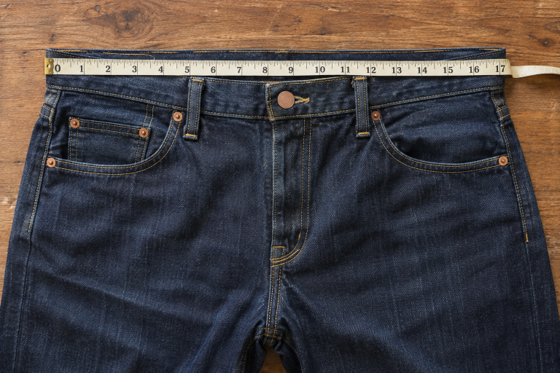
What size jeans do you wear? If you answered with a number, there’s a good chance that number isn’t your real size, because the waist size printed on a pair of jeans often isn’t the actual measurement of the waist.
Back in 2010, Esquire writer Abram Sauer took a tape measure to pants labeled with a 36-inch waist at 7 big chain stores, and not one pair actually measured 36 inches. The closest came in at 37, and Old Navy’s measured 41, which is a very generous way to tell a guy he hasn’t gained a pound. That was pants in general and it was a while ago, but it explains why you can wear a 32 in one brand and a 34 in another.
The fix is to stop shopping by the number on the tag and start shopping by measurements. You already own the best tool for this, which is the pair of jeans or pants that fits you best right now. Here’s how to use it, step by step.
- Lay your best-fitting pair flat on a table, buttoned, with the front facing up.
- Measure straight across the top of the waistband, from one side to the other, and double that number. That’s the waist size that actually fits you.
- Measure the front rise, from the seam at the crotch up to the top of the waistband. The rise tells you where the jeans will sit on your body.
- Measure across one thigh, about an inch below the crotch.
- Measure straight across the bottom of one leg, and double it to get the leg opening all the way around.
- Measure the inseam, from the crotch seam down to the bottom of the hem.
- Compare your numbers to the measurements on the product page or the brand’s size chart. Some brands list the thigh and leg opening flat and some list them all the way around, so check which one they mean, and then pick the size that comes closest.
Brands expect you to shop by measurements, too. Unbranded, one of the picks below, tells shoppers to compare its measurements with a pair that already fits and says anything within half an inch is normal. Levi’s lists the front rise, knee and leg opening on the product page for each fit.
Two of those numbers matter more than the rest. The rise decides how the jeans feel when you sit down, and the thigh decides whether they fit at all. A tailor can take in a waist or shorten a hem, but nobody can add fabric to a thigh that’s too tight. So if you’re between sizes, buy for your thighs and your seat, and have the waist taken in.
When you try a pair on, check 4 things.
- The jeans should stay up without a belt, and you should be able to slide a finger or 2 into the waistband, but not your whole hand.
- The fabric should follow the shape of your butt without sagging below it or pulling tight across it.
- You should be able to pinch about an inch of fabric on the front of your thigh. If you can’t pinch anything, they’re too tight, and if you can grab a handful, they’re too loose.
- Sit down in them. If the waistband digs into your stomach or the back slides down, try a pair with a higher rise.
For the length, the rule from the fall guide still stands: the hem should touch the top of your shoe with one small fold in it. If you can’t find your inseam, buy them long and have them hemmed, which costs a lot less than living with jeans that are 2 inches short. The one exception is jeans labeled shrink-to-fit or unsanforized, which will shrink after the first wash, so follow the brand’s sizing advice for those instead of your measurements. Sanforized means the fabric was shrunk at the mill before the jeans were made, so it will only shrink a little.
Under $60: cheap jeans that don't look cheap
These 2 are the cheapest pairs on the list, and neither one looks it: a plain American straight leg, and the cheapest way to try the Japanese denim the expensive brands use.
1. Lee Regular Fit Straight, about $50
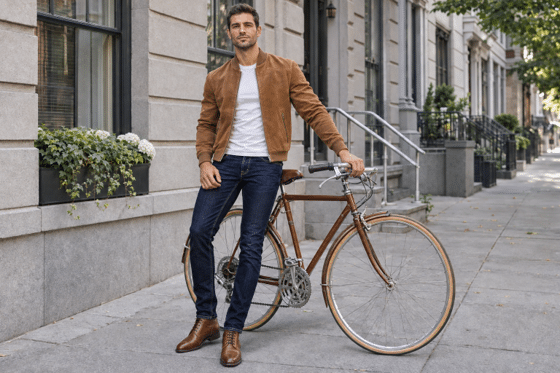
If you want a plain, dark pair of jeans that goes with everything and costs about what you’d spend on a couple of movie tickets and snacks, this is the pair.
Lee has been making jeans since the 1920s, and its Regular Fit Straight is about as basic as a good pair of jeans gets. It’s 100 percent cotton denim with no stretch, it has a regular amount of room through the seat and thighs, and the leg falls straight to a 16-inch opening. The back pockets are plain, which already puts it ahead of most jeans at this price.
FashionBeans picked it as the best budget jean in its guide to the best men’s jeans and called Lee some of the hardest-working denim you can buy. Thousands of owners have rated it at Walmart alone, and the average is about 4.4 out of 5 stars.
The one thing to watch is that Lee sells several straight jeans with similar names, and some of them have stretch. So check the label for 100 percent cotton before you buy, which is a good habit with any brand.
Wear them with a sweater and boots, an Oxford shirt from the fall guide, or a T-shirt and white sneakers. They’re about $50 at regular price, and stores that carry Lee put them on sale often.
2. Uniqlo Slim Straight Selvedge, about $60
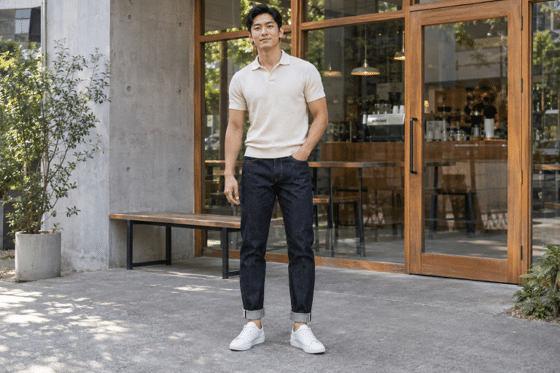
If you want to find out whether you care about fancy denim before you pay for fancy denim, start here.
These are selvedge jeans made from denim Uniqlo developed with Kaihara, the Japanese mill from the section above, and they’re woven on old shuttle looms. Uniqlo says the denim uses thicker threads woven at a slightly lower density, which gives it more body and more depth as it fades. Fold up the hem and you’ll see the clean selvedge edge. They’re slim through the thigh and straight below the knee, and Uniqlo designed in a little extra room below the knee so the leg falls straight instead of clinging. That makes them a good choice if you’re lean and want a sharper look, and a poor choice if you have big legs. They also have a touch of stretch, 1 or 2 percent depending on the color, which keeps them inside my 2 percent rule.
FashionBeans picked Uniqlo’s stretch selvedge jeans as the best affordable dark-wash pair, Gear Patrol wrote that at this price, Uniqlo is practically giving away selvedge jeans, and Heddels has featured a pair of Uniqlo selvedge in Fade Friday, its column on jeans readers have worn for a long time. Uniqlo also shows what its stretch selvedge denim looks like after about 3 years of wear. The dark navy faded to a brighter indigo, fade lines showed up on the inner thighs, and the fabric got softer.
The complaint that comes up most is sizing, which can vary from one Uniqlo style to the next, so this is a good pair to try on in a store before you buy it. Uniqlo also doesn’t use Kaihara denim in every color it makes, so check the product description for the Kaihara name before you order. And Uniqlo says to wash them separately at first, because the color bleeds, and not to put them in the dryer.
Wear them with white sneakers, an Oxford shirt and the overshirt from the fall guide. They’re about $60 at list on Uniqlo’s site.
$70 to $80: the best jeans under $100
Levi’s describes itself as the biggest denim brand in the world, and it’s been making jeans longer than anybody on this list. These are its 2 fits that matter most here, one for guys with big legs and one for everybody else.
3. Levi's 541 Athletic Taper, about $70
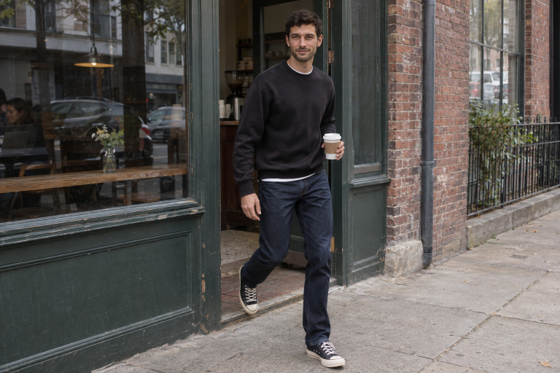
If you skipped straight to this one because you train legs, I don’t blame you.
Levi’s says it designed the 541 for athletic and muscular builds, and it’s been making it since 2014. It gives you extra room in the seat and thighs and then tapers from the knee down to a leg opening of about 15 3/4 inches. Levi’s describes it as the fit for anyone who finds standard jeans tight up top and loose down below, which is exactly the problem guys who train legs run into. The menswear site FashionBeans called it the most purpose-built athletic taper in Levi’s lineup, and the owners who rave about it most are the guys with big legs who never found jeans that fit before.
The one thing to watch is that the 541 comes in a lot of washes and fabrics, from 99 percent cotton with 1 percent elastane to blends with lyocell, a soft fiber made from wood pulp. Sizing changes too, and Levi’s own reviews show some washes running small and others true to size. So read the label and the reviews for the exact pair you’re buying, and stick with low stretch in the darkest, plainest wash you can find.
If you’d rather have a straight leg, which is where fits have been heading, look at the Levi’s 559 Relaxed Straight instead. Levi’s introduced it in 1985, and it gives you extra room through the seat and thighs, a straight leg and a 16 1/2-inch opening. It lists at about $70, the same as the 541.
Wear either one with a fitted T-shirt and white sneakers, or a sweater and boots. The 541 is about $70 at list on Levi’s site, and some of the premium washes cost closer to $100.
4. Levi's 501 Original, about $80
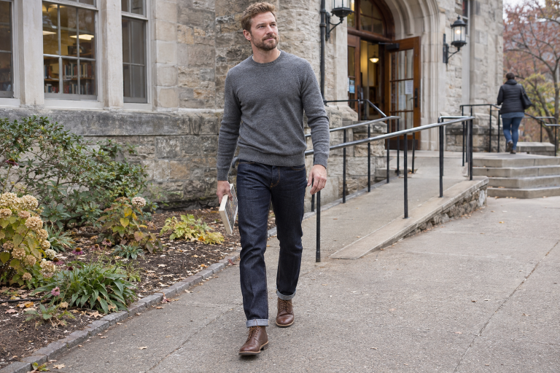
If you only want to own one pair of jeans, my pick is the 501.
It’s the classic straight-leg jean, with a button fly and 100 percent cotton denim with no stretch. It sits at your waist, it’s regular through the thigh, and the leg opening is 16 inches on a size 32. That’s slim enough to look sharp with white sneakers and wide enough to sit over boots. In the fall guide, I called the 501 the default, and nothing in this post changes that.
The 501 has more backing from the people who review jeans than anything else on this list. Gear Patrol picked it as the best overall jean in its guide, pointing to its classic look and how many sizes, washes and lengths it comes in. FashionBeans picked it as the best classic dark-wash jean, and Complex picked it as the everyday pair in its jeans buying guide. Gear Patrol’s 2 knocks are that the sizing can vary between washes and that quality control isn’t always consistent. The sizing problem is one more reason to use your measurements instead of the number you’ve always bought.
There are 2 more things to know before you buy. First, Levi’s also sells a 501 Shrink-to-Fit, which is made to shrink after you wash it, so unless you want to deal with that, make sure the name says Original. And second, if you can’t stand a button fly, look at the Levi’s 505. Levi’s calls it the original zip fly and has made it since 1967, and the non-stretch version sits at your waist with a straight leg, the same 16-inch opening and a lower price of about $60 to $70.
The 501 lists at about $80 on Levi’s site for most washes, and Levi’s marks it down often, so you can usually do better than that if you wait.
About $112: your first pair of raw denim
This is the price where you can get real raw denim, the kind that was never washed after the fabric was dyed. It starts out stiff and almost navy, and over the next year it fades into a pair that’s shaped by the way you move.
5. Unbranded UB301, about $112
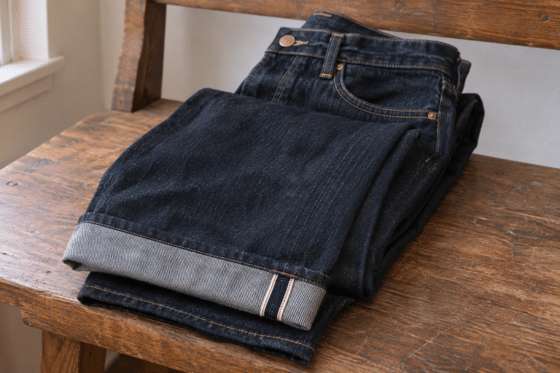
If the section on fading made you want to see what your own jeans would look like after a year, this is the cheapest serious way to find out.
Unbranded comes from the people behind Naked & Famous, a Canadian brand known for raw denim, and the idea is in the name. There’s no logo on the back pockets and the leather patch on the back is blank, so you’re paying for the denim instead of the branding. The UB301 is its straight fit, with a medium rise, a slim seat and thigh, and a straight leg from the knee down, made from 14.5-ounce raw Japanese selvedge denim. That denim is rope-dyed, which means the threads were twisted into ropes and dipped in indigo over and over, and Heddels says rope-dyed raw denim is the kind most likely to give you high-contrast fades. It’s also sanforized, so it won’t shrink much. And raw 100 percent cotton loosens up a little as you wear it, so a new pair should feel snug, not tight, the first time you button it.
If you have big legs, Unbranded makes the same denim in 2 roomier cuts. The UB201 is a tapered fit with a roomier seat and thigh, and the UB601 is a relaxed tapered fit with a higher rise and even more room up top.
Heddels picks Unbranded as its favorite entry-level raw denim and says it gives you the features of a mid-range pair at an entry-level price. The denim site Denimhunters also includes Unbranded in its guide to the best-value selvedge jeans.
New raw denim has 2 quirks you should know about. First, it’s stiff for the first couple of weeks, and sitting down in a new pair feels a little like folding a pizza box, so wear them around the house before you wear them to dinner. And second, new raw denim bleeds indigo onto anything light it rubs against, including your hands, your couch and your white sneakers. If you read our white sneakers guide, you know how I feel about anything that keeps them from staying white. The good news is that it slows down a lot after the first few washes.
They’re about $112 at list on Unbranded’s site.
About $340: the splurge
Most guys never need to spend more than Unbranded costs, and I’d rather tell you that than pretend otherwise. But if jeans are what you wear most days, you might want one pair that feels a little special, and this is that pair.
6. A.P.C. New Standard, about $340
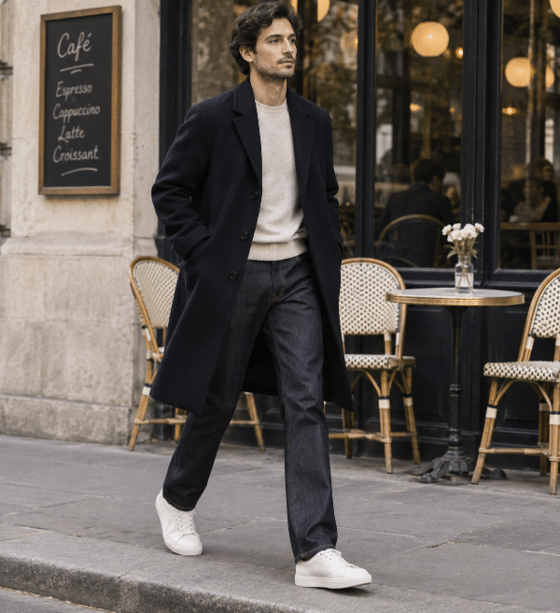
If you’ve ever wondered why anyone pays $340 for a pair of jeans, A.P.C. is the brand most people point to when they explain it.
A.P.C. is a French label that started in Paris in 1987, and its raw denim jeans are what it’s best known for. A.P.C.’s own fit guide calls the New Standard “the A.P.C. jean,” with a mid-rise, a straight leg and a full-length inseam. That inseam runs about 35 inches on a size 32, so plan on having them hemmed unless you’re tall. A.P.C. makes the New Standard in a few different fabrics, including a raw selvedge version, so read the label for stretch before you buy.
Gear Patrol picked A.P.C.’s jeans as the best upgrade in its guide, praising the fit and how quickly the denim fades. The Australian men’s magazine Boss Hunting singles out the New Standard as the A.P.C. cut it recommends, and suggests sizing up if you’re between sizes. Gear Patrol’s knocks are the price and that some reviewers find the seat tight. Mr Porter, the luxury menswear store, describes the New Standard as a slim-straight cut, so it’s trimmer than the roomier jeans a lot of guys are wearing now. If you want more room, A.P.C. also makes higher-rise cuts with a roomier straight leg.
A.P.C. also runs something called the Butler program. If you bring a well-worn pair of A.P.C. raw jeans back to one of its stores and they qualify, you can buy a new pair at half price. A.P.C. washes and mends your old pair, marks them with your initials and puts them back on the sales floor for someone who wants your fades without putting in the time, which means a complete stranger is paying good money for the way you sit.
They’re about $340 at list on A.P.C.’s US site, and A.P.C. puts some of its jeans on sale, so this is the pick where the discount advice below matters most.
How often should you wash your jeans?
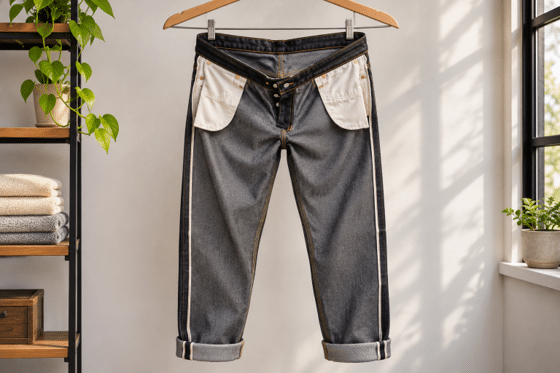
You should wash them less often than you probably do. Levi’s found that the average American washes his jeans after every 2 wears, and that washing them after every 10 wears instead would cut the energy and climate impact of washing them by 80 percent. It’s better for the jeans too, because every wash takes a little indigo with it.
And skipping washes isn’t as gross as it sounds. A textiles professor at the University of Alberta tested a student’s raw jeans after 15 months without a wash, and again 13 days after he finally washed them. The bacteria counts came out about the same both times, and nothing they found was a health risk. That was one guy and one pair of jeans, so it isn’t proof of anything, but it’s a good sign that a few extra wears won’t hurt you.
What doesn’t work is putting your jeans in the freezer to kill the smell. A microbiologist at the University of Delaware who studies bacteria in Antarctica pointed out that a lot of bacteria are built to survive the cold, and the ones that survive wake back up once your body warms the jeans, so your jeans come out of the freezer cold but just as dirty as they went in.
When it’s finally time to wash them, here’s how to do it so they last.
- Turn them inside out, which protects the color on the outside.
- Wash them in cold water with other dark clothes.
- Hang them to dry if you can. A dryer won’t ruin most jeans, but heat shrinks cotton and fades the color faster, and Uniqlo tells owners of its selvedge jeans not to use a dryer at all.
Raw denim is the exception to the usual rules. A lot of guys wait months before the first wash so the fades can set in first, and A.P.C. recommends letting its raw jeans get dirty for as long as possible before you wash them. If you can’t wait that long, wash them inside out in cold water and hang them up, and expect the first wash to take some color with it.
How to buy jeans without overpaying
Once you know your size and your pick, the last step is making sure you don’t pay more than you have to. There are 3 ways to do that.
First, know your numbers before you shop. In my book Dress to Impress and Spend Less, I walk through setting a maximum price for each kind of clothing and a minimum discount you’ll wait for, and the example I use is jeans. Say the most you’ll pay for jeans is $80, and you only buy them at 30 percent off or better. A $120 pair at 35 percent off comes to $78, so it’s a buy. The same pair at 20 percent off is $96, so you wait.
Second, don’t pay list price at the big brands. Levi’s and Gap both mark their own jeans down often, sometimes by 30 percent or more, so if you aren’t in a hurry, wait for a sale.
And third, look secondhand for the classics. Levi’s, Lee and Wrangler have been making the same jeans for decades, so thrift stores and resale sites are full of them, and a pair somebody else already broke in costs less than a new one and comes with the fades included.
Common questions
Are expensive jeans worth it? Only if you care about the fabric. A $300 pair won’t fit better than a $50 pair, but raw selvedge denim fades more sharply over a year or two, and if that sounds like fun, it’s worth paying for. If you just want jeans that look good, the 501 is as far up the list as you need to go.
How many pairs of jeans do I need? Two is the right number to start with: one dark, plain pair that goes with everything, and a second in a different shade or fit, like a lighter wash for summer or a black pair for nights out. A third pair only makes sense once you’re wearing the first 2 most days of the week.
Should I get stretch jeans or 100 percent cotton? Get 100 percent cotton if you want jeans that hold their shape and fade the most, and a little stretch if you want comfort from the first day or you have big legs. Either way, keep it at 2 percent elastane or less so they still look like jeans.
What jeans look best with boots? Straight-leg jeans with an opening of about 16 inches or more look best, worn over the top of the boot instead of tucked in. The 501 and the Lee both have 16-inch openings, and the 559’s is 16 1/2 inches, so any of the 3 works. If you wear boots most days, the Wrangler Cowboy Cut Original Fit is worth a look too. It’s 100 percent cotton, it has barely changed since Wrangler designed it in 1947, Gear Patrol named it the best bargain in its jeans guide, and it’s about $45. It’s cut to fit over boots, which also gives it more of a western look than anything on the main list, so it’s at its best with boots and not with sneakers.
Can I wear jeans to the office? In most offices, yes, as long as they’re dark, plain and fit well, and you wear them with something that looks like you meant it, like a polo or a button-down and a blazer. Leave the rips and the light washes at home, because ripped jeans at the office look like you came straight from helping a friend move a couch.
Should I buy blue jeans or black jeans first? Buy a blue pair first. A dark indigo pair goes with brown shoes, black shoes, white sneakers and almost any shirt you own. Black jeans look great at night and with all-black outfits, but they fade to gray instead of a lighter blue, so they make a better second pair.
Should I cuff my jeans? You can, as long as it’s one small, neat cuff. A cuff is a good way to deal with jeans that are an inch too long, and it shows off the selvedge edge if your jeans have one. If they’re more than an inch or 2 too long, have them hemmed instead.
What shoes go with jeans? Almost anything except the dress shoes you’d wear with a suit. White sneakers are the easiest, and our white sneakers guide covers the pairs worth buying. In winter, wear your jeans over the top of your boots instead of tucking them in, which the winter guide explains.
Where to start
If you’ve read this far and still can’t decide, go get the best-fitting pair of pants in your closet and measure them. That one step will save you more money than any sale, because it keeps you from buying the wrong size twice.
Then buy one dark, plain, straight-leg pair. If you’re not sure which one, buy the 501. If you’re on a tight budget, buy the Lee. If you train legs, buy the 541 or the 559. And if you want to see what raw denim is all about, buy the Unbranded and wear it for a year before you decide anything. Whatever you pick, wear it 3 or 4 days a week and wash it less than you think you should. A year from now, you’ll own a pair of jeans that fits the way you move, and nobody else will have one quite like it.
Prices listed here are regular retail prices at the time of writing. They change, sometimes a lot, so check before you buy. No affiliate links, no sponsored placements, and nobody paid to be on this page.
Readers Also Read