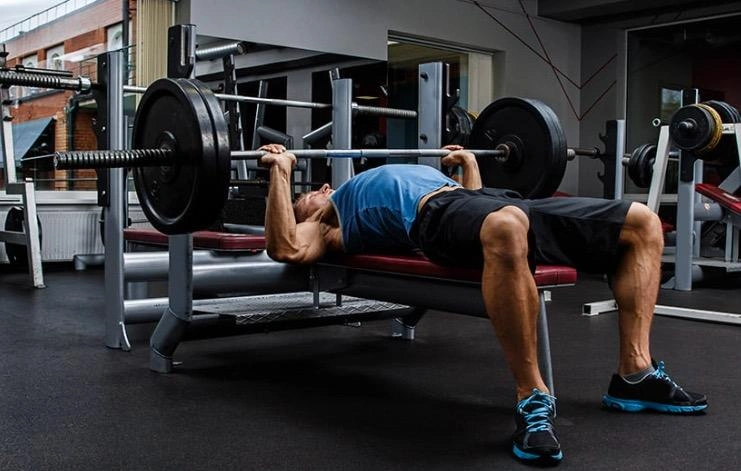

How to Use Creatine to Build Muscle: What to Take, How Much and What to Expect

Creatine on its own won’t make you a shredded, muscular beast. You still have to have the discipline to first show up and work out, and then to work out with intensity. What creatine will do is give you one or two more reps on the sets you’re already doing, and those extra reps are what really build the muscle.
That might not sound like much, but think about how many sets you do in a year. If you lift 3 or 4 times a week, that’s thousands of sets, and getting an extra rep on a lot of them adds up to a lot of extra work by the end of the year. It’s also why creatine is one of the few supplements I’ll recommend without a list of conditions attached. It’s one of the most studied supplements there is, it’s cheap, and it just works.
So if you want the short how-to version before we get into the details, here it is. Buy plain creatine monohydrate powder, ideally one with a third-party testing seal on the label. Take 3 to 5 grams every day, including the days you don’t train, at whatever time you’ll actually remember. You can skip the loading phase, the week of extra-large doses that a lot of labels recommend. Expect the scale to go up a couple of pounds in the first week or two, and expect the first real difference to show up in your training log rather than in the mirror.
The rest of this post explains why each of those steps is the right one. First, I’ll show you what creatine actually does inside your muscles, with a test you can try at your next workout. Then we’ll go through why plain monohydrate beats everything else on the shelf, how to take it, what to expect week by week, and how to make sure those extra reps turn into muscle. At the end, I’ll answer the questions guys ask most, including the ones about hair loss and kidneys.
Before you buy any creatine, one thing about what it actually does
A lot of guys assume creatine works like protein, where you take it and your body uses it as building material for new muscle. Creatine doesn’t work that way, and once you know what it does instead, the rest of this post makes a lot more sense.
Your muscles keep a small reserve of fast energy for short, hard efforts that last a few seconds, like the heaviest reps of a set. That reserve is called phosphocreatine. It’s the first thing your muscles burn through when a set gets hard, and it runs low quickly, which is part of why the last couple of reps feel so much harder than the first few. When you take creatine every day, your muscles store more of it, so you start each set with a bigger reserve.
You can feel this system at work the next time you train. Pick a weight you can do for about 10 reps, do a hard set, and then rest only 30 seconds, which is going to feel a lot shorter than 30 seconds, before you try the same weight again. You’ll probably lose several reps on the second set. Compare that to your normal sets with 2 or 3 minutes of rest, where most of those reps come back. A big part of what comes back during that rest is your phosphocreatine refilling. It only gets about halfway back in the first 30 seconds, and it takes around 3 to 5 minutes to fill almost all the way. Creatine raises how much your muscles can store in that reserve, and that extra storage is where the extra rep or two comes from.

That’s also why creatine’s effect on muscle is real but smaller than the internet makes it sound. A team of researchers led by Ryan Burke and Brad Schoenfeld in New York pooled 10 studies where people lifted weights and took either creatine or a placebo, a look-alike powder with nothing in it, and every one of those studies measured the muscle directly with ultrasound, MRI or CT scans. The lifters taking creatine did come out ahead, but by roughly 1 to 1.5 millimeters of muscle thickness. A lot of the bigger numbers you’ll see quoted come from studies that measured total lean body mass instead, meaning everything in your body that isn’t fat, and that measurement counts the extra water creatine pulls into your muscles as if it were muscle.
So creatine isn’t building that muscle directly. What it does is let you get more work done in every workout, and the extra work is what builds the muscle. That means creatine only pays off if you use those extra reps to add weight over time, which is what the training section later in this post is about.
Why plain creatine monohydrate beats everything else on the shelf
If you’ve shopped for creatine, you know it doesn’t come in one version. There’s monohydrate, micronized monohydrate, creatine HCl, buffered creatine, creatine ethyl ester, flavored blends, capsules and gummies, and the most expensive ones usually have the most convincing labels. So which one should you buy? The answer is plain creatine monohydrate, and there are 2 reasons it isn’t close.
First, monohydrate is the form the research was done on. When you read that creatine is one of the most studied supplements there is, the vast majority of those studies used monohydrate, so it’s the version with the track record. Second, none of the newer forms have beaten it when researchers tested them against it directly.
As for the alternatives, creatine HCl is sold on the idea that it dissolves better in water, and it does. But dissolving better in a glass doesn’t mean your muscles end up with more of it, and the trials that compared it with monohydrate haven’t found an advantage. Buffered creatine was tested head to head against monohydrate at Texas A&M, and it didn’t raise muscle creatine any more or produce better results in the gym. Creatine ethyl ester actually did worse. When researchers at Baylor University tested it, it raised creatine levels in the blood and muscle less than plain monohydrate did, because a lot of it breaks down into creatinine, a waste product your muscles can’t use, before it ever reaches them.
Micronized monohydrate is the same thing ground into a finer powder, so it mixes more easily and leaves less grit at the bottom of the glass. It usually costs a little more, and it’s only worth it if the regular kind bothers you. Capsules are fine too, since they’re the same monohydrate, but you’ll have to swallow several of them to get a full dose, and you’ll usually pay more per gram.
Gummies are where you have to be careful, because in a lot of the lab tests, people were mostly paying for candy. Creatine slowly breaks down when it sits in water, and gummies are made with water, which is one reason so many of them have failed testing. When the supplement company NOW tested 12 brands of creatine gummies, 5 of them had little or no creatine in them. A separate set of lab tests run by SuppCo, a company that rates supplements, found that 4 out of 6 popular gummies failed, while all 5 of the powders they tested passed. If gummies are the only way you’ll take creatine every day, buy only from a brand that publishes current lab results showing how much creatine is in each serving.
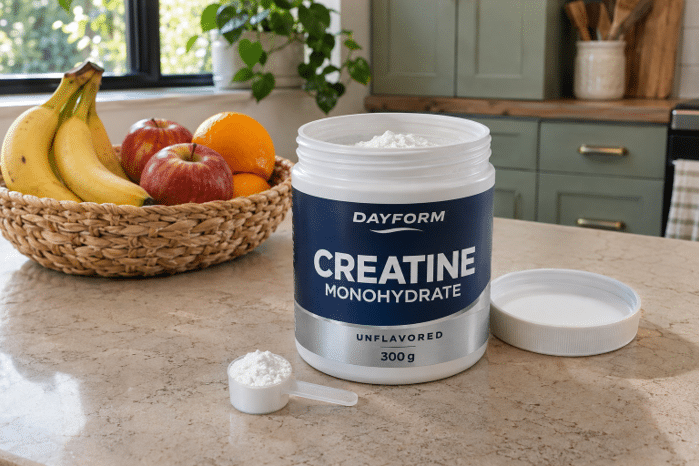
Whichever form you pick, check the label for 3 things. First, it should say creatine monohydrate, and that should be the only ingredient, or the main one if it’s flavored. Second, it should tell you exactly how many grams of creatine are in a scoop. If the creatine is hidden inside a “proprietary blend” that only lists a total weight, put it back on the shelf. And third, look for a third-party testing seal. The 2 you’ll see most are NSF Certified for Sport and Informed Sport. Both test for substances that are banned in sports, and NSF Certified for Sport also checks that what’s in the container matches the label and screens it for contaminants like heavy metals. Powders from established brands have held up well in testing even without a seal, but a seal means somebody besides the company checked.
2-minute CONFIDENCE QUIZ
Find out what's holding you back: your body, your style, or your dating life.
9 questions. You get a score for each and the one area to work on first.
How to take creatine
Once you’ve bought the right creatine, taking it is the easy part, and most of the rules you’ve heard about it are more complicated than they need to be. So how much should you take, and when?
Take 3 to 5 grams a day. That’s usually one scoop, but check the label, because scoop sizes aren’t the same from brand to brand. Take it every day, including the days you don’t train. Creatine works by keeping the stores in your muscles full, and that builds up over weeks of daily use, not in the hour after you take it. Missing a day here and there won’t undo anything, so if you forget, take your normal amount the next day instead of doubling up.
You’ll see labels and forums recommend a loading phase, which means taking about 20 grams a day, split into 4 servings of 5 grams, for 5 to 7 days before dropping to your normal daily amount. Loading works, but you don’t need it, and I’d skip it. Researchers at the University of Nottingham took muscle samples and found that 3 grams a day for 28 days filled creatine stores just as much as 6 days of loading did. So loading only gets you there about 3 weeks sooner, and it’s also the part of creatine most likely to upset your stomach, because big single doses are what usually cause the trouble. If you do load, split it into those 4 servings, unless you want to learn where every bathroom near your office is.
When you take it matters a lot less than people think, so take it whenever you’ll remember. Researchers have compared taking creatine right before a workout with taking it right after, and the differences they’ve found are small and inconsistent, with a slight lean toward after. That’s not worth planning your day around. What matters is taking it every day, so tie it to something you already do every day, like your morning coffee or your post-workout shake.
You can mix it into water, a protein shake, juice or coffee. Unflavored monohydrate barely tastes like anything, but it doesn’t always fully dissolve in a cold drink, so stir it well and drink the last sip, since that’s where some of it settles. Taking it with a meal works too, and the carbs and protein in a meal can even help your muscles take in a little more, though that isn’t something you need to plan around.
And you don’t need to drink extra water because you’re taking creatine. The old warnings about creatine causing dehydration and cramps haven’t held up in the research, so drink what you’d normally drink on a day you’re training hard.
What to expect, week by week
There are 2 things that make guys second-guess creatine. The first is a scale that jumps in the first week, and the second is a mirror that doesn’t seem to change for a while. Both are normal, and knowing the timeline ahead of time makes it a lot easier to stick with.

In the first week or two, expect the scale to go up a couple of pounds. That’s water, and it’s water inside your muscles, not under your skin. Your muscles pull water in along with the creatine they store, so the jump on the scale is a sign that creatine is working, not a sign that you’re getting fat. If you weigh yourself every morning, this is the week to stop taking the number personally. If you loaded, the jump usually shows up within the first few days.
If you didn’t load, your muscles fill up gradually over about 3 to 4 weeks. Somewhere in that stretch, you’ll probably notice that the last reps of a set feel a little easier, or you’ll get one more rep on a weight that used to stop you. The change won’t feel like a different body. It’ll feel like having a slightly better day in the gym, more often.
From there, the muscle comes from the training, the same slow way it always does, with creatine helping you do a little more of it each week. Give it at least 3 months of steady training before you judge it. Muscle takes time to build, and if you quit creatine or switch programs after a few weeks, you won’t be able to tell what was working.
How to make creatine pay off in your training
Creatine gives you an extra rep or two, and those reps only build muscle if you use them to do more over time, which is called progressive overload. Every week, try to beat what you did the week before, whether that’s 1 more rep, the next weight up, or cleaner form on a rep that was getting sloppy. A lot of guys can tell you which creatine they take but couldn’t tell you what they benched last Tuesday, and the second number matters a lot more than the first. So write down the weight and the reps for every exercise, every workout, because that’s the only way you’ll know when creatine has given you an extra rep.

So what does that look like in practice? Say you’ve been stuck at 10 reps on the dumbbell bench press with the 60s for a few weeks, stopping each set with 2 clean reps left in you. A few weeks into taking creatine, you get 11, and then 12, still with 2 clean reps left. Once you’re hitting 12 on every set, move up to the 65s and start back at 10. That’s the extra reps turning into extra weight, and the extra weight is what keeps your muscles growing.
Notice that the example still stops every set with 2 clean reps left, because creatine doesn’t change that rule. It’s tempting to treat the extra energy as permission to grind every set to failure, but taking every set all the way to failure piles up more fatigue than your body can recover from, and it costs you reps in your next few workouts. Use the extra reps to add weight over time, not to bury yourself every session.
Creatine also can’t make up for the basics. You still need to eat enough protein, sleep enough, and train each muscle often enough. In my book Lean Into Muscle, creatine is at the top of a short list of supplements I recommend, but that list comes after diet, training and sleep in the book, not in place of them. If you want the whole system laid out, the book has 3 ready-to-use workout templates, for 3, 4 and 5 training days a week, built on the same rules as this post. And for a longer explanation of how to keep adding weight, read the progressive overload guide.
What about the study that says you don't need to lift?
You may have seen headlines saying creatine builds muscle even if you never work out. They come from a real study, and it’s worth knowing what it actually found before you cancel your gym membership.
Researchers at Texas A&M followed 64 adults between 45 and 65 for 12 weeks. The participants chose whether to join an exercise and diet program or keep living the way they were, and within each group they were randomly assigned to take either 10 grams of creatine a day or a placebo. Among the people who didn’t exercise, the ones on creatine gained about 2.4 pounds of lean tissue and got stronger on the leg press and bench press, while the non-exercisers on the placebo stayed about the same. The people who exercised and took creatine did the best of anyone.
That’s a real result, but there are 3 things to keep in mind. First, lean tissue on a body scan includes water, and creatine pulls water into your muscles, so some of those 2.4 pounds were likely water rather than new muscle. Second, the people in the study were middle-aged and weren’t exercising, which is a very different starting point from a guy who already lifts. And third, when researchers in Brazil gave about 200 older women a smaller daily dose of creatine for 2 years without a lifting program, the creatine didn’t add anything to their lean mass or their strength.
So for a guy reading this post, the takeaway doesn’t change. Creatine may turn out to help people who don’t lift, but if you want to build muscle you can see, lifting is still the part that does the work, and creatine just helps you get more reps out of it.
Common questions
Does creatine cause hair loss? Based on the best evidence we have, it doesn’t. The worry comes from one small study of 20 college rugby players in South Africa, where a hormone linked to hair loss, called DHT, went up after 3 weeks of creatine. That study only measured blood levels and never looked at anyone’s hair, and no one has been able to repeat the result since. A later trial gave 45 men who lift either 5 grams of creatine a day or a placebo for 12 weeks, measured both their DHT and their actual hair, and found no difference between the 2 groups. That trial didn’t follow anyone for years, so if baldness runs in your family and you’re worried, it’s worth a conversation with a dermatologist, but nothing so far shows creatine speeding it up.
Is creatine bad for your kidneys? Creatine hasn’t been shown to harm healthy kidneys, and reviews of the research in healthy adults haven’t found kidney damage at normal doses. Most of the worry traces back to a single case report from the late 1990s and to a number on a blood test. Creatine raises creatinine, a waste product doctors use to check how well your kidneys are working, so your bloodwork can look off even when your kidneys are fine. If you already have a kidney problem, talk to your doctor before you start, and if you’re getting bloodwork done, tell your doctor you take creatine so the creatinine number gets read correctly.
Will creatine make me look bloated or puffy? It shouldn’t, because the water creatine pulls in goes inside your muscles, not under your skin. Most of that happens in the first week or two, and studies that ran longer haven’t found people holding extra water compared with how much muscle they have. If your stomach feels bloated, that usually comes from taking too much at once, and dropping to 3 to 5 grams a day takes care of it for most people.
Do I need to cycle off creatine? You don’t need to cycle it. Taking it for a few weeks and then stopping for a few weeks doesn’t make creatine work any better, and daily use over the long term has a good safety record in healthy adults. All a break does is let your muscle stores drain back down, which takes about a month, so you’d spend part of every break without the extra reps.
Can I take creatine with coffee? Yes, you can. The idea that caffeine cancels out creatine traces back to one small study from the 1990s, in which 9 people took a large dose of caffeine during a creatine loading phase. Researchers haven’t been able to repeat that result at normal amounts of caffeine, so a couple of cups of coffee a day isn’t worth worrying about.
Does creatine still work if I’m over 40? Yes, and older adults have been studied a lot, with creatine helping when it’s paired with lifting. In the pooled analysis from earlier in this post, the extra muscle was a little smaller in older lifters than in younger ones, so treat creatine as a small edge on top of your training, whatever your age.
I eat a lot of meat. Do I still need creatine? You’ll probably still benefit, though maybe a little less than a guy who doesn’t eat much meat. Meat and fish contain creatine, and a normal diet with meat gives you about 1 to 2 grams a day, which keeps your muscles partly full but not all the way. A pound of raw beef only has about 1 to 2 grams of creatine in it, and cooking knocks some of that out, so getting 5 grams a day from food would mean eating several pounds of meat every day, which is a grocery bill nobody needs. Vegetarians usually notice the biggest difference from creatine, because their stores start out lower.
What happens if I stop taking creatine? Your muscle stores slowly drain back to normal over about a month, and the couple of pounds of water that came with them goes too, so don’t panic when the scale drops. You keep the muscle you built, as long as you keep training and eating enough protein. What goes away is the extra rep or two.
Is creatine a steroid? No, creatine isn’t a steroid, and it doesn’t work anything like one. Your body makes creatine on its own from amino acids, it’s in the meat and fish you already eat, and it isn’t a hormone. Reviews of the research have found it doesn’t change testosterone in any meaningful way, and it’s allowed in sports, which is why you can find it with the NSF and Informed Sport seals on the label.
Where to start
Start with 2 things this week. First, buy plain creatine monohydrate powder, ideally one with a third-party seal, and take 3 to 5 grams every day alongside something you already do every morning. Second, at your next workout, write down the weight and the reps for every exercise. A few weeks from now, when you get a rep you couldn’t get before, you’ll see it in your log, and you’ll know it’s time to add weight.
Readers Also Read